

Radek Zbořil: Single-atom engineering has added an entirely new dimension to chemistry
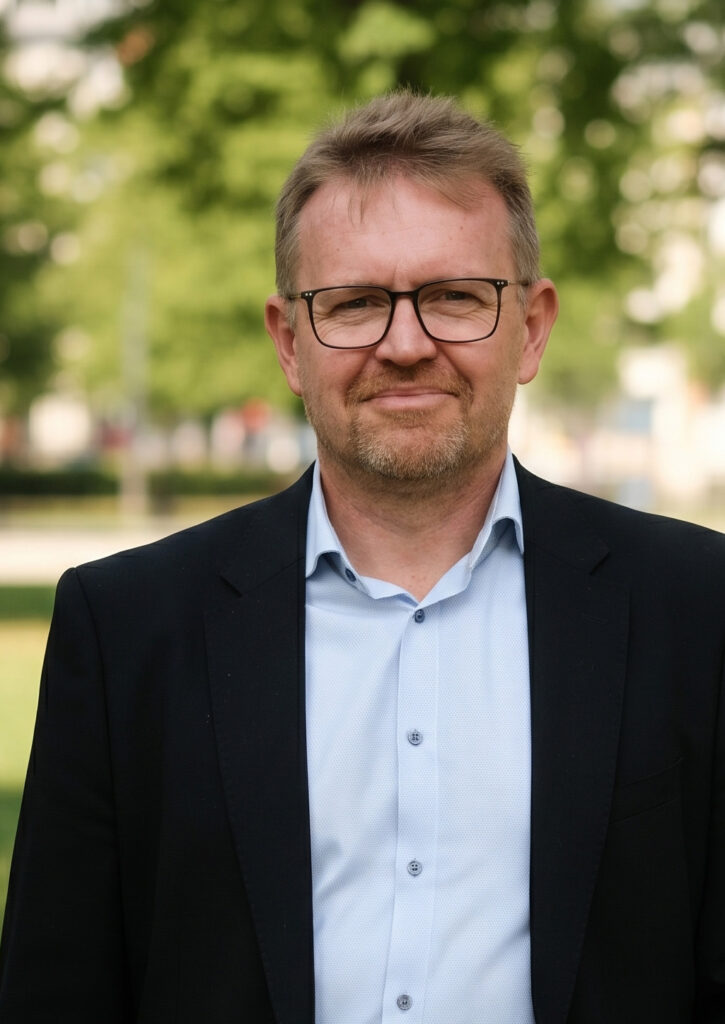
At the turn of the 20th and 21st centuries, research into and applications of nanomaterials experienced tremendous growth. Today, scientists are gradually moving beyond the boundaries of the nanoscale world, and so-called Single Atom Engineering (SAE), based on the development of materials with atomic precision, is experiencing a major boom. One of its pioneers is Radek Zbořil, a physical chemist at CATRIN.
When did you start working with this approach, and what has driven its development?
We have been intensively involved in single-atom engineering for approximately six years. The origins of this young and rapidly developing field are closely linked to chemical catalysis and the development of so-called single-atom catalysts. However, we are also successfully advancing the principles of single-atom engineering in energy technologies, medicine, sensing and water treatment technologies. Put simply, this approach allows us to precisely control the arrangement of individual atoms within materials and thereby significantly enhance their efficiency, selectivity and other functional properties. In this sense, we are moving beyond the boundaries of nanotechnology. At the same time, however, we frequently use nanomaterials as well-defined supports for individual metal atoms, building on our long-standing expertise in nanoscale science.
What are the main benefits of single-atom engineering in chemical catalysis, and how should we imagine a single-atom catalyst?
If we focus on single-atom catalysts, they are usually based on inexpensive materials such as carbon structures, polymers or organic frameworks. We firmly anchor individual metal atoms onto their surfaces, achieving a state in which every metal atom actively participates in the chemical reaction. The result is a dramatic increase in efficiency while using many times less metal. Single-atom catalysts also often allow us to steer chemical reactions more effectively and carry them out at significantly lower temperatures and pressures. This leads to reduced costs and a lower carbon footprint for chemical manufacturing.
Can you give some examples?
Among many examples, I would mention two studies we published with colleagues from Germany in Nature Catalysis, both demonstrating the potential of single-atom engineering. Single-atom catalysts can significantly improve industrial hydrogenation processes, which traditionally rely on molecular hydrogen and operate at high temperatures and pressures, making them costly and energy-intensive. Using inexpensive iron-based single-atom catalysts, we can work under much milder conditions and produce a broad range of amine compounds through nitrile hydrogenation. Similarly, this year we used an analogous atomic system to achieve low-temperature conversion of polystyrene into valuable chemicals used in pharmaceuticals and the chemical industry. This represents a major advance in terms of recycling possibilities for polystyrene, a key plastic of which only two to three per cent is currently recycled.
Is single-atom engineering also making its way into environmental technologies and water treatment?
Yes, and again I can mention two examples. This year, our team introduced a new generation of filtration membranes developed using single-atom engineering. These membranes simultaneously remove heavy metals and bacteria with exceptional efficiency, require no electricity, are inexpensive to maintain and could find applications ranging from industrial wastewater treatment to emergency situations and the provision of drinking water in developing countries. We have also demonstrated that single-atom engineering can contribute to controlling the movement of light-driven nanorobots capable of capturing and removing microplastics from contaminated water, opening up new opportunities in environmental technologies.
Single-atom engineering has also contributed to the development of atomic antibiotics. Are there other potential medical applications?
We are very excited about atomic antibiotics. Thanks to a new mechanism, we have achieved high effectiveness against a broad spectrum of problematic bacteria, and repeated use has not resulted in the development of resistance. At a time when deaths associated with antibiotic resistance are increasing dramatically, I consider this a major contribution. We currently see the greatest potential of our atomic antibiotics in wound healing, where we have already developed highly effective hydrogels whose performance has been verified in animal models. With slight modifications to the atomic system, we are also observing strong antifungal properties. We are applying similar principles of single-atom engineering in selective anticancer therapy, where we are working on an entirely new mechanism capable of triggering the selective collapse of tumour cells. We collaborate with colleagues in Sweden, and I believe we may already deliver some exciting results in this area later this year.
What other area should not be overlooked?
Certainly energy conversion and storage. For example, we are developing plasmonic systems capable of efficiently converting solar energy into heat, achieving record efficiencies in light-driven ammonia conversion. Ammonia is considered a highly promising hydrogen carrier for future energy applications. We have also introduced an atomic photocatalyst inspired by enzymes found in the human body, which produces hydrogen peroxide with record efficiency. At the same time, we are using single-atom engineering in combination with novel carbon materials for supercapacitors, which offer faster charging, longer lifetimes and greater safety than conventional lithium batteries.
Has single-atom engineering pushed the boundaries of science?
The examples I have mentioned are only fragments of a much bigger picture, yet they clearly demonstrate the enormous potential of single-atom engineering. This technology has introduced an entirely new dimension to chemistry, bringing significant economic, environmental and medical benefits. I feel that single-atom engineering could deliver major breakthroughs in both antimicrobial and anticancer therapies, and it would be wonderful to be part of that journey.
How does Czech science compare internationally in the field of SAE?
There are several teams in the Czech Republic working on single-atom engineering, particularly in chemistry and chemical catalysis, and these groups are certainly competitive at the European level. In other fields, especially medicine, we adopted this strong trend somewhat later, but there is still tremendous room for breakthrough discoveries.
You witnessed the rise of nanomaterials and are now a pioneer of single-atom engineering. What surprises might await scientists in ten or twenty years?
It is true that not long ago, single-atom engineering seemed unimaginable. One of the key factors that made it possible was the tremendous progress in advanced imaging and microscopy techniques.
Cutting-edge infrastructure that enables us to work with materials at the atomic level and analyse their structure and properties with unprecedented precision is crucial. Another pillar is international collaboration, because this is truly multidisciplinary research. Above all, however, scientists must have the courage to look at problems from entirely different perspectives and continuously learn new things. Then surprises come every day. It constantly reminds me how diverse and fascinating the work of a scientist can be.