

LESIA project supports research stay focused on graphene-based biosensors
How can biosensors be improved to enable faster and more accurate diagnostics? Vishnu Pullangatil from the Czech Advanced Technology and Research Institute (CATRIN) of Palacký University explored this questions during his research stay at Aarhus University in Denmark. The stay was supported by the LESIA project, whose key objectives included fostering international scientific collaboration.
At Aarhus University, Vishnu Pullangatil focused on biosensors based on Graphene Derivatives developed at CATRIN under the leadership of Aristeidis Bakandritsos and Indresh Verma. Using Atomic Force Microscopy (AFM), he studies how synthetic DNA aptamers are arranged and attached to the surface of these materials. Their precise arrangement is one of the key factors determining the sensitivity and reliability of biosensors, which could find future applications in areas such as medical diagnostics.
“During this research stay, I gained practical experience with advanced techniques such as AFM and SEM-EDX and deepened my understanding of nanomaterials and biosensor development. I also had the opportunity to present our work at the LESIA symposium, which was attended by Radek Zbořil, the principal investigator of the LESIA project at Palacký University. In addition, the research stay strengthened collaboration between our research groups and supported the development of new materials for future LESIA project applications,” said Vishnu Pullangatil.
Another major benefit of the research stay was access to state-of-the-art laboratory technologies and cutting-edge research equipment. The two research teams are already discussing future collaborative projects and are keen to continue working together. The knowledge and experience gained during the stay are expected to contribute to upcoming scientific publications and new joint research activities within the LESIA project.
Alongside the scientific experience, Vishnu Pullangatil is also taking home memorable impressions from Denmark.
“I was especially impressed by how many people in Aarhus ride their bikes every day, even for long distances. It makes the city feel very active and sustainable. And, of course, the long summer days!”
The LESIA project supports the mobility of researchers and creates opportunities for knowledge exchange, access to world-class research infrastructures, and the development of new international partnerships.
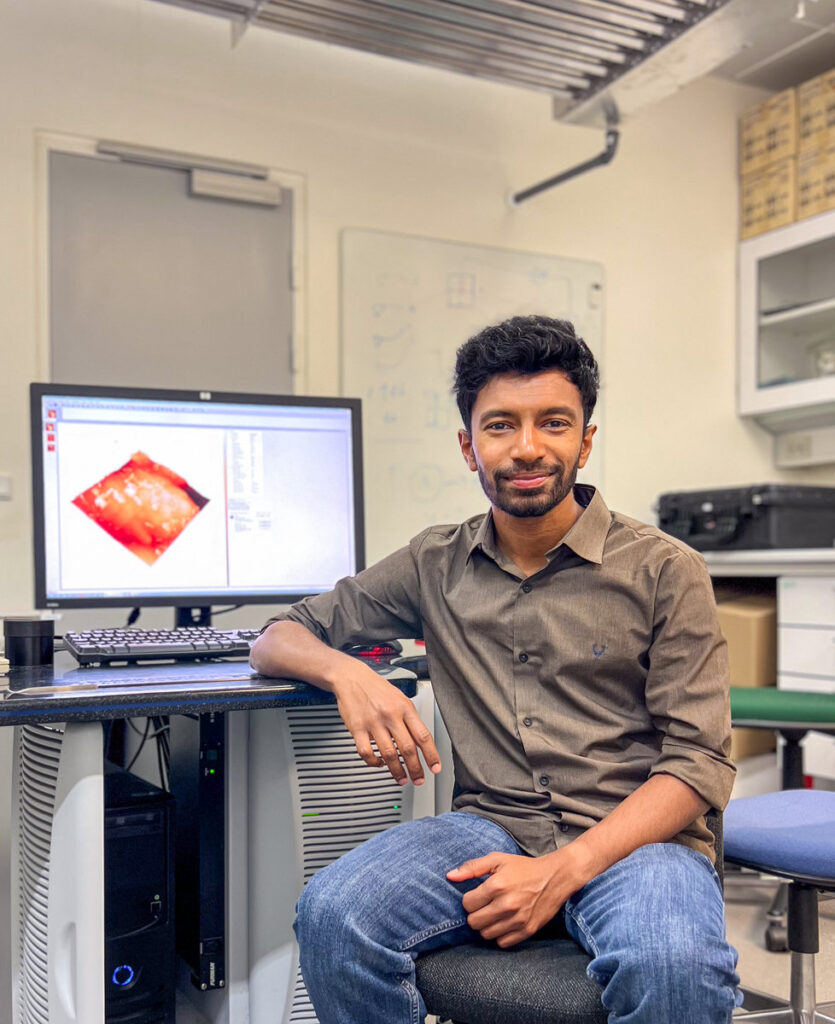
Photo: Denisa Pavelková