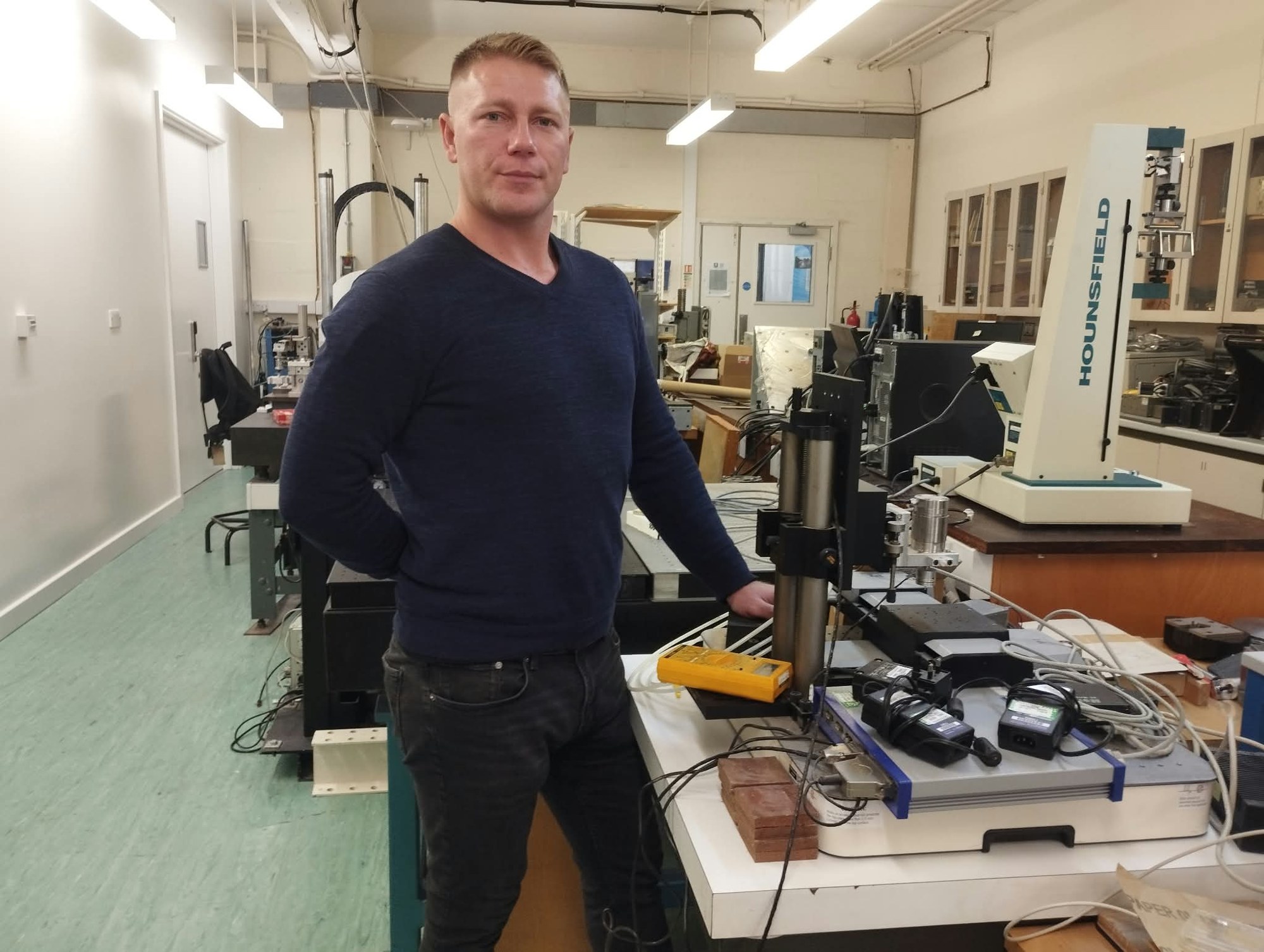
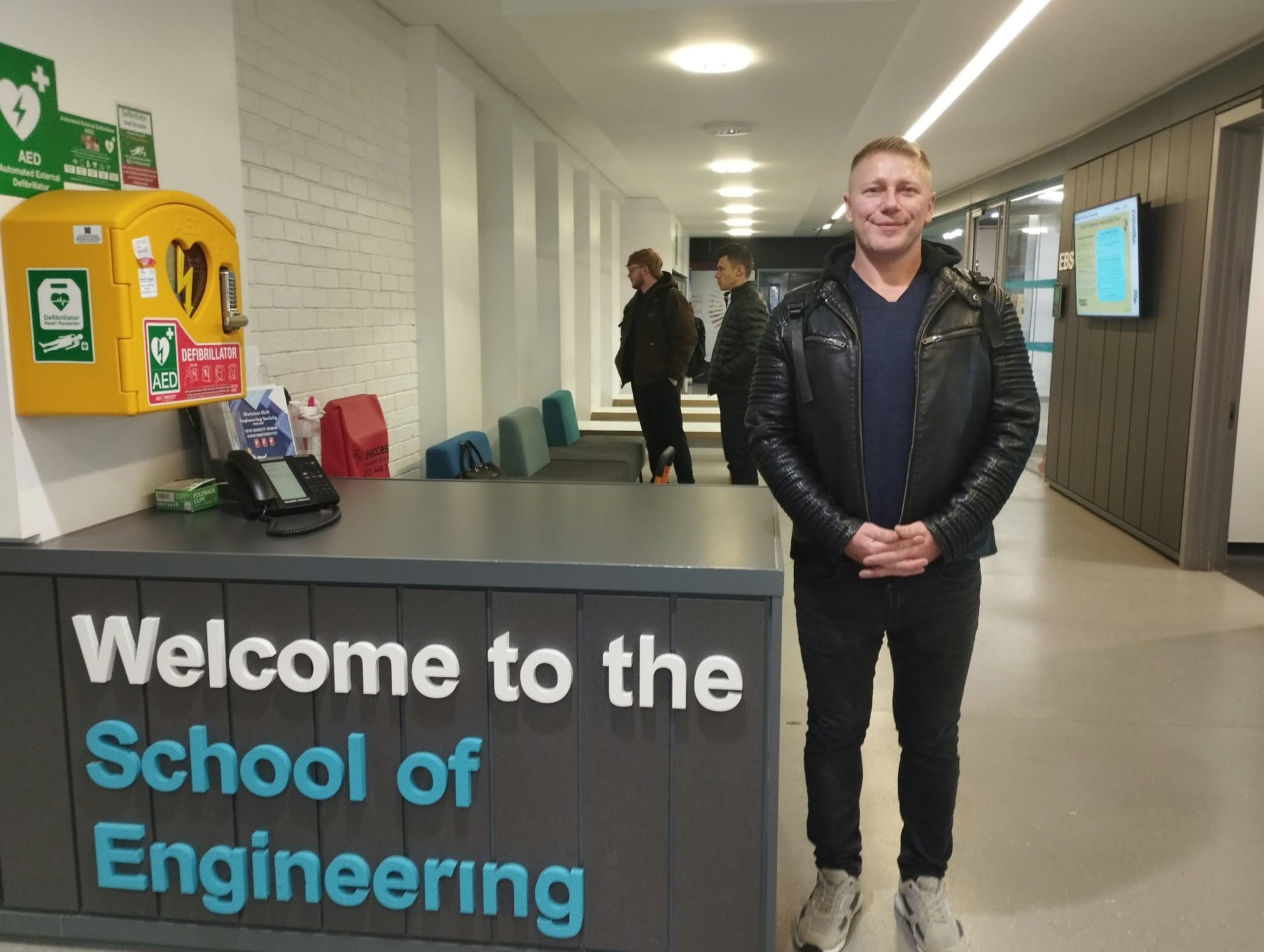
Oleksandr Riabonenko investigates zinc electrodes for batteries at the University of Warwick
Oleksandr Riabonenko from CATRIN is studying zinc metal electrodes for water-based zinc-ion batteries at the University of Warwick, where he is completing an approximately two-month research stay through the LESIA project. The aim is to understand how laser treatment of the electrodes affects battery performance.
“The stay gives me access to complementary expertise and advanced characterisation techniques, helping me understand the materials we study in greater depth. Within the LESIA project, this research contributes to exploring how laser technologies can be used in electrode design for emerging energy storage systems,” explained Riabonenko, who has been in the United Kingdom since October.
He considers the opportunity to experience a different scientific and working environment one of the key benefits of the stay. Working with colleagues from diverse research backgrounds brings fresh perspectives, helps improve experimental design and ultimately strengthens the quality of the research carried out together.
“What has struck me is how a different research environment can bring fresh perspectives to familiar scientific questions. This exchange encourages me to reconsider established approaches and explore new possibilities. The institute also has state-of-the-art laboratories equipped with modern, high-performance instrumentation for the analysis and characterisation of material surfaces. Access to this infrastructure adds tremendous value to the research,” the scientist added.
The collaboration is expected to result in a joint publication and presentations at scientific conferences. “We also hope to establish a long-term collaboration between Palacký University Olomouc and the University of Warwick, continue the exchange of scientific knowledge and potentially arrange further research visits beyond the LESIA project,” Riabonenko concluded.
Since March 2024, researchers from Denmark, Germany, Spain, Italy and the United Kingdom have been collaborating in the LESIA project under the leadership of Aarhus University, together with associated partners from Hong Kong and China. The project aims to address one of the major societal challenges – finding new green sources of sustainable energy. The researchers are developing next-generation batteries capable of storing this green energy.