Plant phenomics has taken on a new dimension. A researcher from CATRIN involved in its development into an independent field
An international team of scientists has presented a new definition and scientific framework for plant phenomics in the prestigious journal Trends in Plant Science. Jana Kholová, a researcher from CATRIN, was also involved in this significant step, which was a necessary and previously missing prerequisite for establishing plant phenomics as a distinct scientific discipline. According to experts, it could fundamentally influence the way in which scientists study plants and their ability to adapt to their environment.
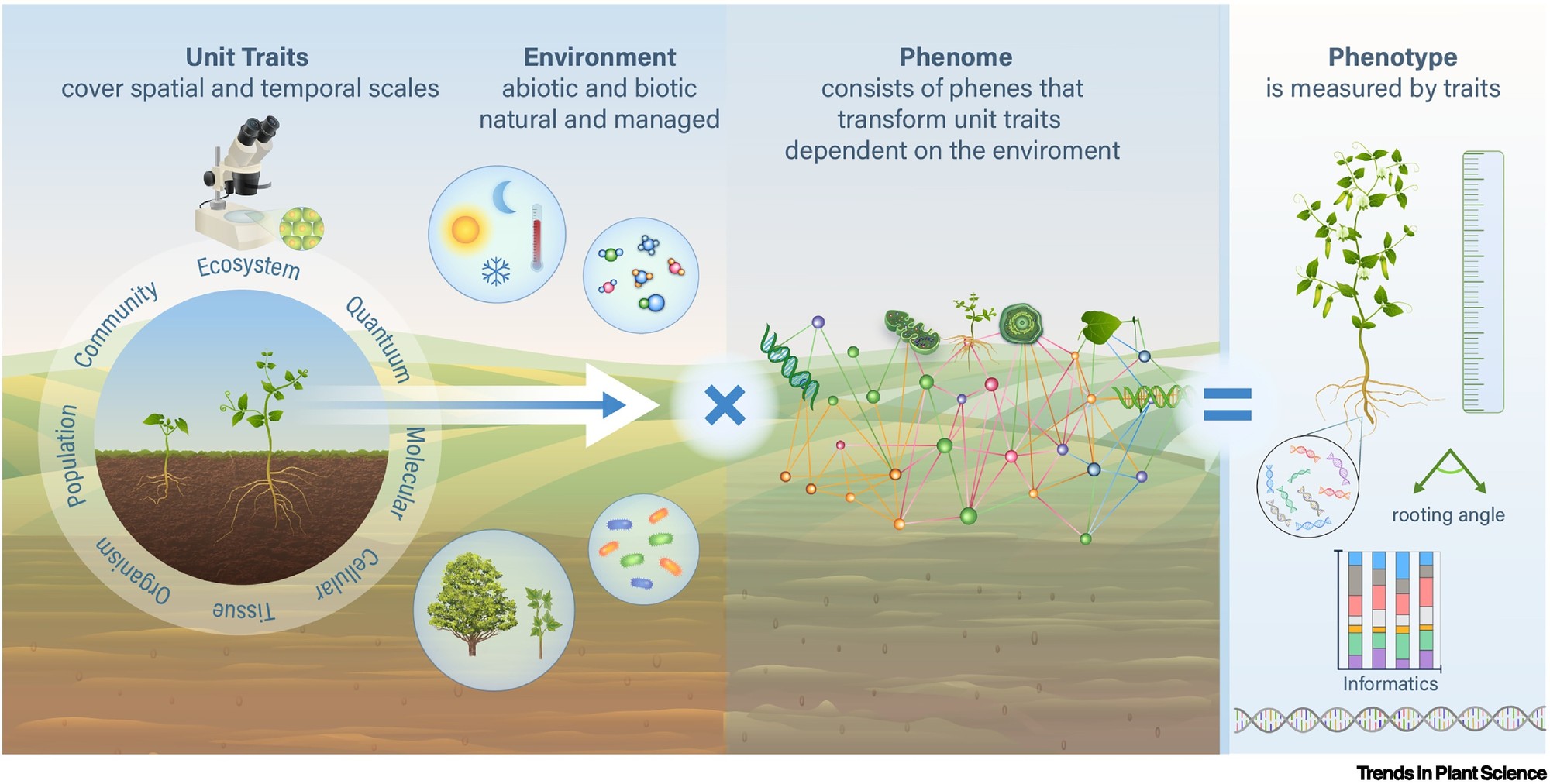
The main contribution is the new conceptual framework designed to unify what has until now been a fragmented field and clearly define its scope of investigation. Plant phenomics has primarily been associated with modern technologies, sensors, imaging methods and data analysis. The authors now emphasise that its true purpose is to uncover the mechanisms that determine the form, development and functioning of plants. This enables scientists to better understand how plants grow, develop and respond to their environment. Until now, however, there has been no unified definition clearly outlining what this field encompasses and what its fundamental principles are.
“The new approach emphasises that plant traits are determined not only by their genes, but also by complex processes occurring at various levels – from molecules and cells to whole plants and ecosystems. These processes influence one another, change over time and respond to environmental conditions. Understanding them can help scientists better predict how plants will respond, for example, to drought, high temperatures or other stressful conditions. The newly proposed scientific framework thus creates a common basis for the further development of plant phenomics and also defines a new professional specialisation – a plant phenomics specialist,” said Jana Kholová, co-author of the publication.
The central element of this framework is the definition of a phenome as a set of phenes that govern phenotypic dynamics across all spatial and temporal levels of biological and ecological organisation and in interaction with the environment. This approach is important, for example, for agriculture and nature conservation. A better understanding of plants’ responses to the environment can contribute, for example, to the breeding of more resilient crops, the adaptation of agriculture to climate change, and the conservation of biodiversity.
Plant phenomics utilises a wide range of modern methods and technologies. These include, for example, automated imaging systems, specialised cameras and sensors that enable the monitoring of plant growth, their physiological state or their responses to stressful conditions. Scientists also use drones, robotic platforms and advanced measurement methods capable of detecting changes invisible to the naked eye. The data obtained is then processed using mathematical models, computational methods and artificial intelligence. By integrating these technologies with biological research, scientists can monitor plants from the level of individual cells right up to entire fields or ecosystems, and gain a better understanding of the processes that influence their growth, development and ability to adapt to changing conditions.
The article was co-authored by experts from the USA, Germany, Japan, Norway, Belgium, China, Canada, Ireland and the Netherlands. Jana Kholová, who works at CATRIN as well as at the Czech University of Life Sciences Prague, is the only Czech representative on the team.