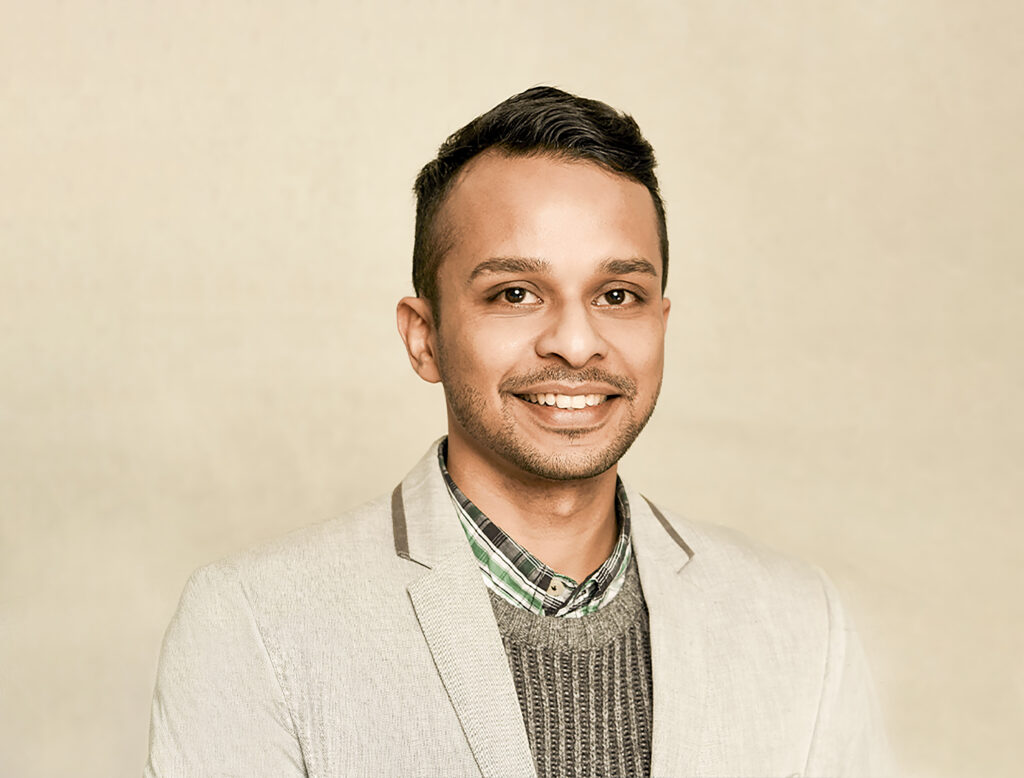

Viswanath Das: My dream is to bridge the gap between laboratorydiscoveries and real benefits for patients
Combining his experience in molecular and cellular biology with biomedical research focused on specific diseases was the main reason why Viswanath Das came from New Zealand 13 years ago to the Institute of Molecular and Translational Medicine at the Faculty of Medicine, Palacký University. After CATRIN was established, he joined CATRIN-IMTM, where he focuses on neurodegenerative diseases, including Alzheimer’s and Parkinson’s disease.
“These diseases are associated with changes in specific proteins in the brain. Under normal conditions, these proteins have important functions, but during disease they can change their structure, aggregate, and contribute to the gradual loss of function of nerve cells. In our group, we are trying to understand how these abnormal protein aggregates form, spread and contribute to disease progression. At the same time, we are interested in how to use these findings to develop more robust experimental models, biomarkers and therapeutic strategies,” explained the scientist from India.
His long-term goal is to help develop non-invasive or minimally invasive methods that will enable these pathological changes to be detected earlier and allow for more accurate differentiation between the various types of tauopathies. “This could lead to more accurate diagnoses and, over time, to more effective treatment strategies. These diseases pose an ever-greater challenge to public health, yet diagnoses are often made late and treatment options remain limited. For me, the true scientific dream is to bridge the gap between laboratory discoveries and real benefits for patients,” said the researcher, who considers the establishment of his own research group at IMTM and the development of an independent research direction in the field of translational neurodegeneration to be among his greatest achievements.
At CATRIN-IMTM, he particularly appreciates the fact that a range of advanced instruments and methodological facilities are available in one place, which is essential for the type of translational biomedical research he is engaged in. He is drawn to the strong focus on translational medicine, especially the connection between basic laboratory discoveries and practical application in patient care. “I also appreciate that CATRIN-IMTM and Palacký University are connected to a number of national and European research networks, which makes it easier to find suitable experts or specialized facilities if a project requires additional experimental support,” added the scientist, who has also worked at the Mario Negri Institute for Pharmacological Research in Milan.
As he admits, he already feels at home in Olomouc. “When I first arrived in the Czech Republic from New Zealand, the first city I got to know was Prague, and it was love at first sight. But now I feel at home in Olomouc. The city has a calm and friendly atmosphere, which I really appreciate. I like its peaceful character and its identity as a university town. At the same time, Olomouc has a great location. When I need to relax and recharge my batteries in a bigger city, Prague or Vienna are just a few hours’ drive away,” he concluded.